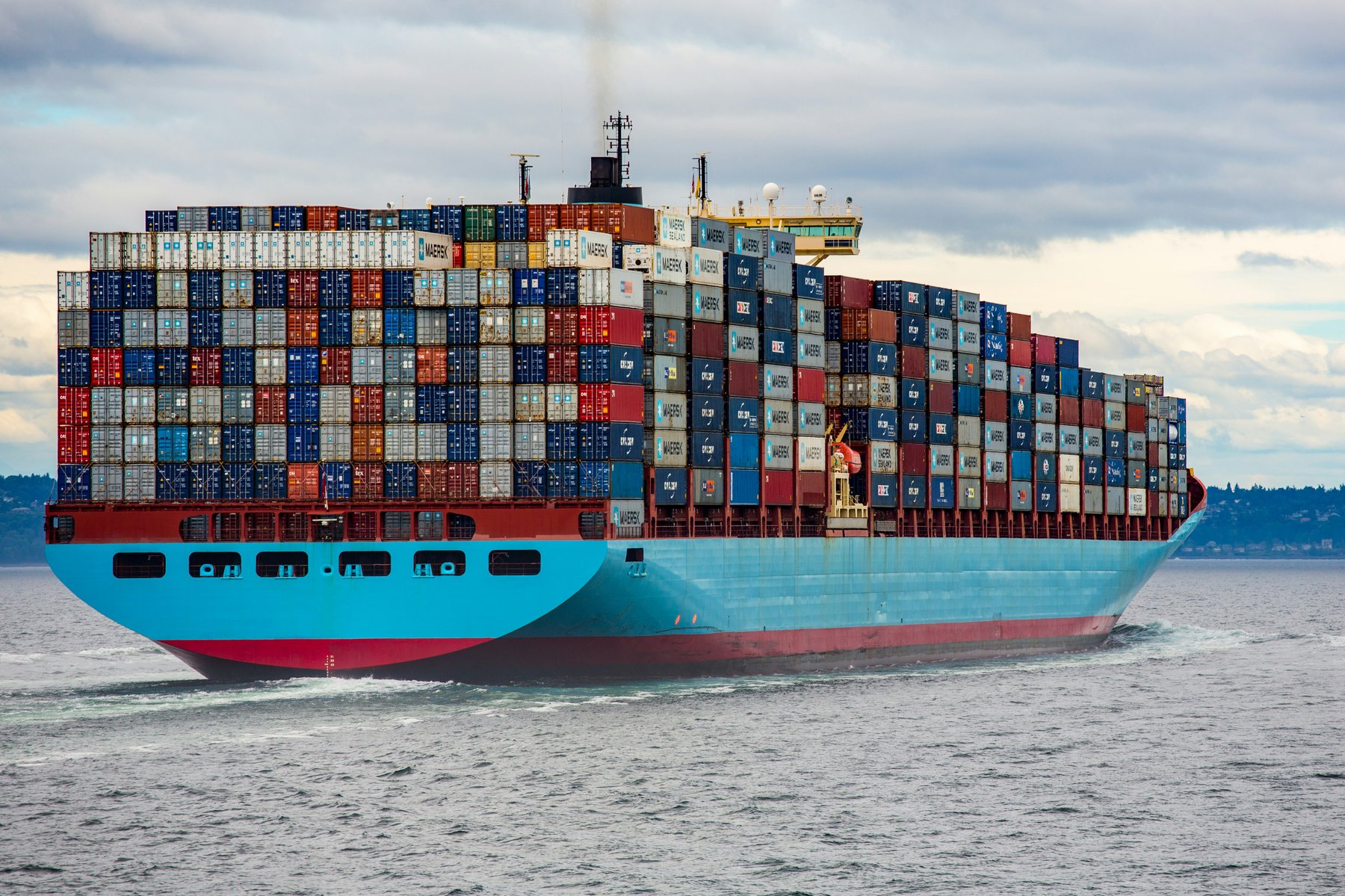

A container drops during unloading. A ship suffers a casualty and the captain orders cargo thrown overboard to save the vessel. Your goods were on board. Without insurance, that loss is yours, in full. And there's an angle almost no one tells you: not insuring also raises the taxes you pay. If you import often, the open cover policy is the tool that solves both at once.
What an open cover policy is
It's an annual "master" policy under which all your shipments for the year are covered with a single contract and an annual premium. Each time you ship, you declare the value of that shipment and it's covered automatically, with no need to quote trip by trip.
It's the efficient option for companies with recurring volume (usually from ~20 shipments a year): one contract, continuous coverage, less admin. The alternative is the specific policy, which covers a single shipment and has to be taken out before each trip.
What it covers
International transport coverage is based on the London Institute clauses, in three levels:
- Clause A (All Risks): the broadest. It covers any physical loss or damage to the cargo, except what's expressly excluded. Recommended for high-value goods.
- Clause B: broad named risks (fire, overturning, collision, grounding, general average, damage during loading/unloading).
- Clause C: the most basic, only major maritime casualties (fire, sinking, collision).
A key concept of maritime law that these policies cover is general average: when part of the cargo is sacrificed or extraordinary expenses are incurred to save the ship and the rest of the cargo, all cargo owners share the loss proportionally. Without insurance, you pay that contribution out of your own pocket even if your goods arrived intact.
The hidden cost of NOT insuring
Here's the fact that changes the equation. When calculating import duties, if you don't present an insurance policy, the National Customs Service (Servicio Nacional de Aduanas) estimates the insurance at around 2% of the FOB value. That percentage is quite a bit higher than the real premium of a cargo insurance policy.
What does that mean? That insurance is part of the CIF value, which is the base for calculating tariff and VAT. If Customs "assigns" you a 2% instead of your real premium, it inflates the taxable base and you end up paying more taxes. Presenting a real policy, with a lower premium, brings down that component and therefore the base. Translation: insuring not only protects you from a claim, it often optimizes what you pay in duties.
How to arrange it (and SICE's role)
The master policy is issued defining the estimated annual program: volume, maximum amounts per shipment and destinations. Then, trip by trip, certificates are issued. SICE coordinates this within the same flow as your import: we help ensure the policy is in force before shipping and is correctly declared at clearance, so you avoid both an uninsured claim and an inflated taxable base. One point of contact, all connected.
Mini-FAQ
Should I get an open cover or a specific policy?
If you import occasionally, a specific policy per trip may be enough. If you import often, the annual open cover is more efficient and keeps you from forgetting to insure a shipment.
Which coverage do I choose?
For valuable goods, Clause A (All Risks). For more standard cargo, B or C depending on the risk. A broker tailors it to your type of cargo.
Does insurance lower my taxes?
It doesn't lower them directly, but by declaring a real premium (lower than the 2% of FOB Customs estimates without a policy), you reduce the insurance component of the customs value and, with it, the tariff and VAT base.
What if the damage happens during loading/unloading at the port?
Clause A covers damage in those operations; Clause C doesn't. That's why choosing the right level matters.
Ready to stop coordinating on your own?
With SICE, a single person coordinates freight, insurance, customs and transport, and answers for the deadlines. Start with a free complete quote.
With SICE, a single person coordinates freight, insurance, customs and transport, and answers for the deadlines. Start with a free complete quote.